
If you want to reduce the energy used by your laundry, the biggest choices are usually water temperature, spin speed, dryer temperature, and how long the dryer runs. In general, washing in cold water and using a high-speed spin are among the most efficient washer settings, while sensor drying and lower heat can reduce dryer energy use.
The exact amount of energy used per load depends on the appliance, load size, cycle length, and whether your dryer is electric or gas. That means there is no single kWh figure that applies to every Normal, Eco, Heavy, or Quick cycle.
For most Canadian households, a practical default is to wash in cold water, run full but not overloaded loads, use a high-speed spin, and use sensor drying rather than timed drying whenever possible. Natural Resources Canada specifically recommends these habits for lowering laundry energy use.
Which Washer Settings Use the Least Energy?
For a washing machine, cold water is generally the lowest-energy temperature setting because the machine does not need to use as much energy to heat the water.
Warm and hot cycles use more energy because of water heating. Hot water can still be appropriate for certain heavily soiled items or when the garment care instructions call for it, but it is usually unnecessary for a typical everyday load.
A high-speed or extended spin can also improve overall laundry efficiency. It removes more water from clothes before they enter the dryer, which can shorten drying time.
Source: Natural Resources Canada, “Clothes washers,” accessed August 11, 2026.
https://natural-resources.canada.ca/energy-efficiency/energy-star/products/list-certified-products/clothes-washers
How Do Common Washer Settings Compare?
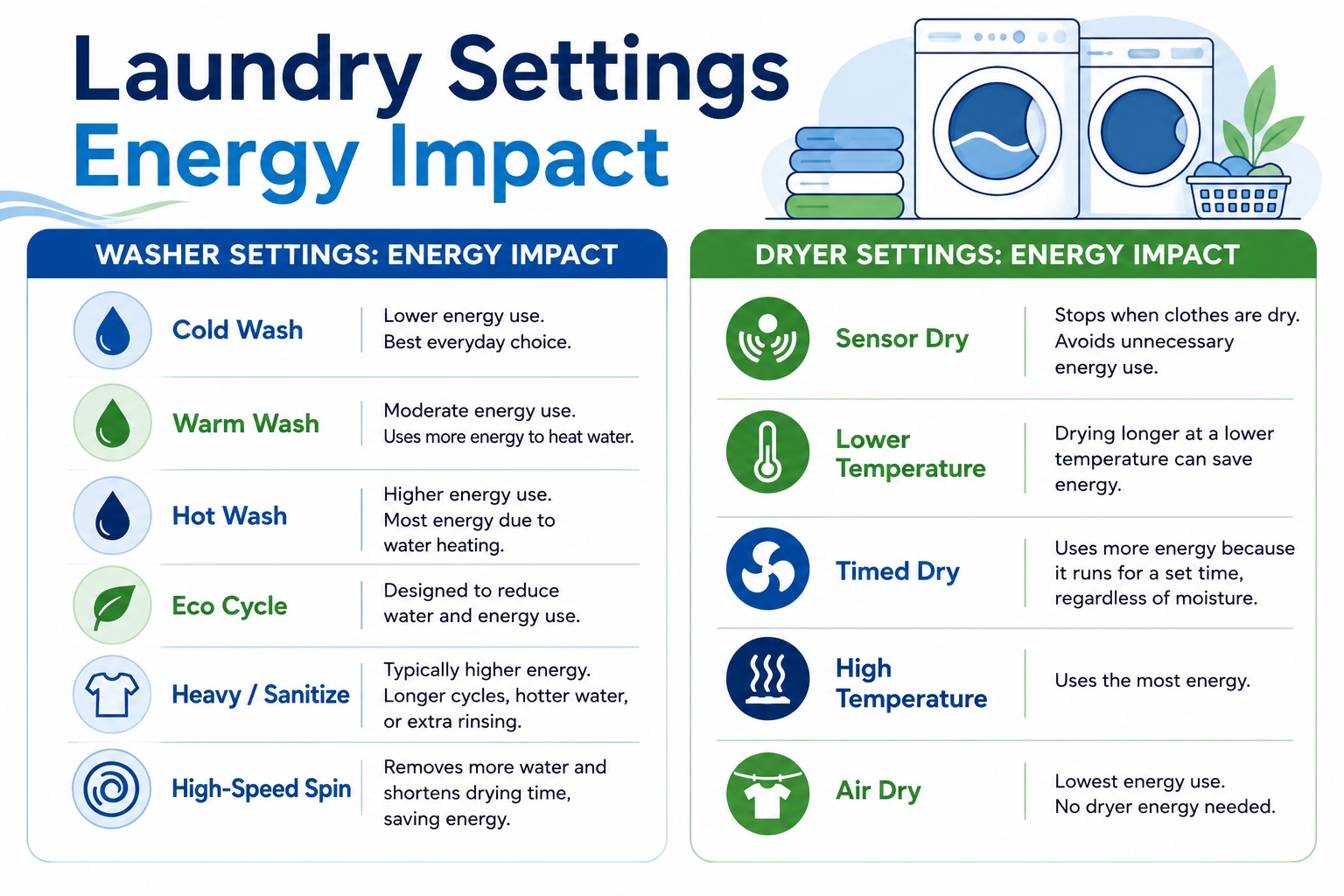
In general, washer settings fall into these energy ranges:
- Cold wash: Lower energy use
- Warm wash: Moderate energy use
- Hot wash: Higher energy use because more water heating is required
- Eco: Usually designed to reduce water and energy use
- Heavy / Sanitize: Typically higher because of longer cycles, hotter water, or additional rinsing
- High-speed spin: Can reduce total laundry energy use by shortening dryer time
The exact difference depends on the washer. If you want to know which program uses the least energy on your particular machine, check the owner’s manual or manufacturer specifications.
Which Dryer Settings Use the Least Energy?
Dryers are often more energy-intensive than washers, so drying settings can have a noticeable effect on total laundry energy use.
Sensor dry is generally preferable to simply running a long timed cycle. Moisture sensors allow the dryer to stop once clothes are dry instead of continuing to use energy unnecessarily.
Lower-temperature settings can also be efficient. Natural Resources Canada notes that ENERGY STAR certified dryers commonly include an extra-low heat setting because drying for longer at a lower temperature can save energy.
At the lowest end, air drying clothes on a line or drying rack avoids dryer energy use altogether.
Source: Natural Resources Canada, “Clothes dryers,” accessed August 11, 2026.
https://natural-resources.canada.ca/energy-efficiency/energy-star/products/list-certified-products/clothes-dryers
High-Energy vs. Low-Energy Laundry Settings
For a typical household, the difference looks something like this:
Lower energy use
- Cold wash
- Full but not overloaded washer
- High-speed spin
- Sensor drying
- Lower dryer temperature
- Air drying
Higher energy use
- Hot wash
- Sanitize or intensive wash
- Small or inefficiently sized loads
- Low spin speed followed by longer drying
- High-temperature drying
- Long-time drying or over-drying
The important point is that washer and dryer settings work together. A setting that removes more water during the spin cycle can reduce the amount of work the dryer has to do afterward.
What Laundry Settings Are Generally Recommended?
For most everyday clothing, a good energy-efficient routine is to wash in cold water, select an appropriate full load, use a high-speed spin, and dry with the sensor setting.
Avoid overloading either appliance. An overfilled washer may not clean clothes properly, while an overloaded dryer restricts airflow and can increase drying time.
It can also help to sort items by thickness. Towels and jeans typically take longer to dry than lighter clothing, so separating them can prevent lighter items from being repeatedly heated after they are already dry.
Natural Resources Canada also recommends cleaning the lint trap after every dryer load and keeping dryer vents clear to maintain airflow and performance.
Source: Natural Resources Canada, “Make laundry day more energy efficient,” modified June 10, 2025, accessed August 11, 2026.
https://natural-resources.canada.ca/stories/spotlight-energy-efficiency/make-laundry-day-more-energy-efficient
What Energy Rating Should You Look for in Canada?
When buying a washer or dryer in Canada, look for both the ENERGY STAR symbol and the EnerGuide label.
An ENERGY STAR certified clothes washer uses about 25% less energy and 33% less water on average than a standard model, according to Natural Resources Canada. An ENERGY STAR certified dryer uses about 20% less energy on average than a standard model.
The EnerGuide label shows the appliance’s annual energy consumption and lets you compare it with similar models. For comparable appliances, a lower annual kWh number indicates lower electricity use.
Source: Natural Resources Canada, “What does the EnerGuide label mean?”, modified January 16, 2025, accessed August 11, 2026.
https://natural-resources.canada.ca/energy-efficiency/product-energy-ratings/energuide/what-does-energuide-label-mean
What About Heat Pump Dryers?
If you are replacing a dryer, heat pump models are worth considering.
Natural Resources Canada states that heat pump dryers can use 20% to 60% less energy than standard models by recirculating heat instead of continually generating and exhausting hot air. They can cost more upfront, but the energy savings can be significant for households that do a lot of laundry.
All heat pump dryers that meet ENERGY STAR criteria also qualify for the ENERGY STAR Most Efficient designation.
Source: Natural Resources Canada, “Clothes dryers,” accessed August 11, 2026.
https://natural-resources.canada.ca/energy-efficiency/energy-star/products/list-certified-products/clothes-dryers
The Best Everyday Laundry Settings
For most loads, you do not need the hottest or most intensive settings.
A simple default is to wash in cold water, use a high-speed spin, fill the washer without overloading it, and use sensor drying at a lower temperature. When practical, air drying reduces energy use even further.
At Peace Power, we believe understanding how everyday appliances use energy makes it easier to make practical choices at home. Laundry is repetitive, so small changes to the settings you use every week can add up over time.