
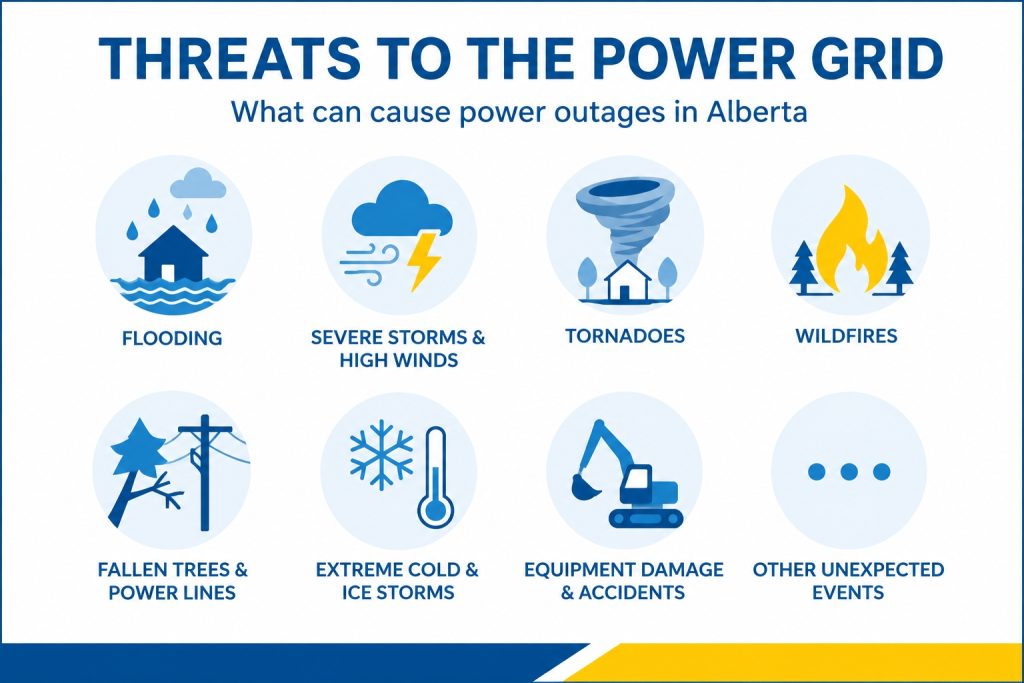
Flooding can cause significant damage to homes, roads, and businesses, but it also poses serious challenges for Alberta’s electrical infrastructure. Even when floodwaters don’t directly reach your property, they can affect the equipment that delivers electricity to entire neighbourhoods.
Understanding how floods impact the power grid can help explain why outages happen, why restoration sometimes takes time, and why utility crews place such a strong emphasis on safety.
What Is Alberta’s Electrical Infrastructure?
Before electricity reaches your home or business, it travels through a network of equipment known as the electrical grid. This includes:
- Transmission lines
- Distribution lines
- Substations
- Transformers
- Utility poles
- Underground electrical cables
These assets are owned and maintained by Alberta’s local electricity distribution companies, while electricity retailers like Peace Power supply your energy and manage your account.
How Flooding Affects the Power Grid
Floodwater can damage electrical equipment in several ways.
Substations Can Become Flooded
Substations reduce high-voltage electricity to the levels used by homes and businesses. Because they contain sensitive electrical equipment, even a small amount of water can create serious safety risks.
If flooding threatens a substation, utility operators may shut it down to prevent equipment damage or electrical hazards.
Depending on the size of the facility, a single substation can serve thousands of customers.
Water Can Damage Transformers
Transformers are designed to operate outdoors, but prolonged exposure to floodwater can damage insulation, wiring, and internal components.
After flooding, utilities inspect transformers carefully before returning them to service. In some cases, damaged equipment must be replaced entirely.
Fallen Trees Can Damage Power Lines
Flooding is often accompanied by high winds and saturated ground, making trees more likely to fall.
When trees contact overhead power lines, they can:
- Break utility poles
- Damage electrical conductors
- Pull down transformers
- Block access for repair crews
Removing trees safely is often one of the first steps before power restoration can begin.
Underground Equipment Isn’t Immune
Many people assume underground power lines are protected from flooding.
While underground systems are shielded from wind damage, water can still enter underground vaults, conduits, and electrical cabinets. Floodwater can also make repairs more complicated because crews must safely remove water before inspecting equipment.
Why Utilities Sometimes Shut Off Power
Power outages during flooding aren’t always caused by damaged equipment.
Sometimes, distribution companies intentionally disconnect electricity to protect residents and emergency responders.
Shutting off power can reduce the risk of:
- Electrical shock
- Equipment failure
- Electrical fires
- Damage to customer property
While temporary outages are inconvenient, they are often the safest option during major flooding.
Why Restoring Power Takes Time
After floodwaters begin to recede, utilities don’t simply turn the power back on.
Crews follow a structured process that typically includes:
- Inspecting substations and transformers.
- Looking for damaged poles and power lines.
- Clearing fallen trees and debris.
- Testing equipment for safety.
- Restoring power in stages.
Critical infrastructure such as hospitals, emergency services, and water treatment facilities may be prioritized before residential neighbourhoods.
Stay Safe After a Flood
If flooding has affected your area:
- Never touch downed power lines.
- Stay away from flooded electrical equipment.
- Never enter standing water if electrical hazards may be present.
- Report damaged power lines to your local distribution company.
- Wait until your home has been inspected before using electrical equipment exposed to floodwater.
If electrical equipment inside your home has been submerged, have it inspected by a qualified electrician before restoring power.
Know Who to Contact During an Outage
If flooding causes a power outage, your local electricity distribution company is responsible for restoring service. Peace Power supplies your electricity, but the distribution company owns and maintains the poles, wires, transformers, and substations in your area.
You can identify your distribution company using your Site ID, which is listed on your utility bill. If you’re unsure who to call, refer to our Alberta Electricity & Natural Gas Emergency Contact Numbers infographic or visit our Outages & Emergency Contact page.
Alberta’s Power Grid Is Built for Resilience
Flooding is one of many weather events that Alberta’s electrical infrastructure is designed to withstand. However, extreme rainfall and flash floods can still damage equipment and create conditions where temporary outages are necessary to protect public safety.
Understanding how the power grid works and knowing who to contact during an outage can help you respond confidently when severe weather strikes.
If you have questions about your Peace Power account, our customer care team is here to help. For outages, emergencies, or distribution service inquiries, always contact your local electricity distribution company first.