
When the power goes out, restoring electricity involves more than simply flipping a switch. The local electricity distributor needs to identify where the problem occurred, determine what caused it, make sure repairs can be completed safely, and fix any damaged equipment before electricity can be restored.
In Alberta, your electricity retailer and electricity distributor have different jobs. Your retailer provides your electricity plan and manages your account and billing. Your distributor operates and maintains the infrastructure that physically delivers electricity to your property.
According to the Utilities Consumer Advocate, you should contact your retailer with billing questions and your distributor when there is an outage or emergency. Contact information for both companies can be found on your utility bill.
So, what is actually happening while you’re waiting for the lights to come back on?
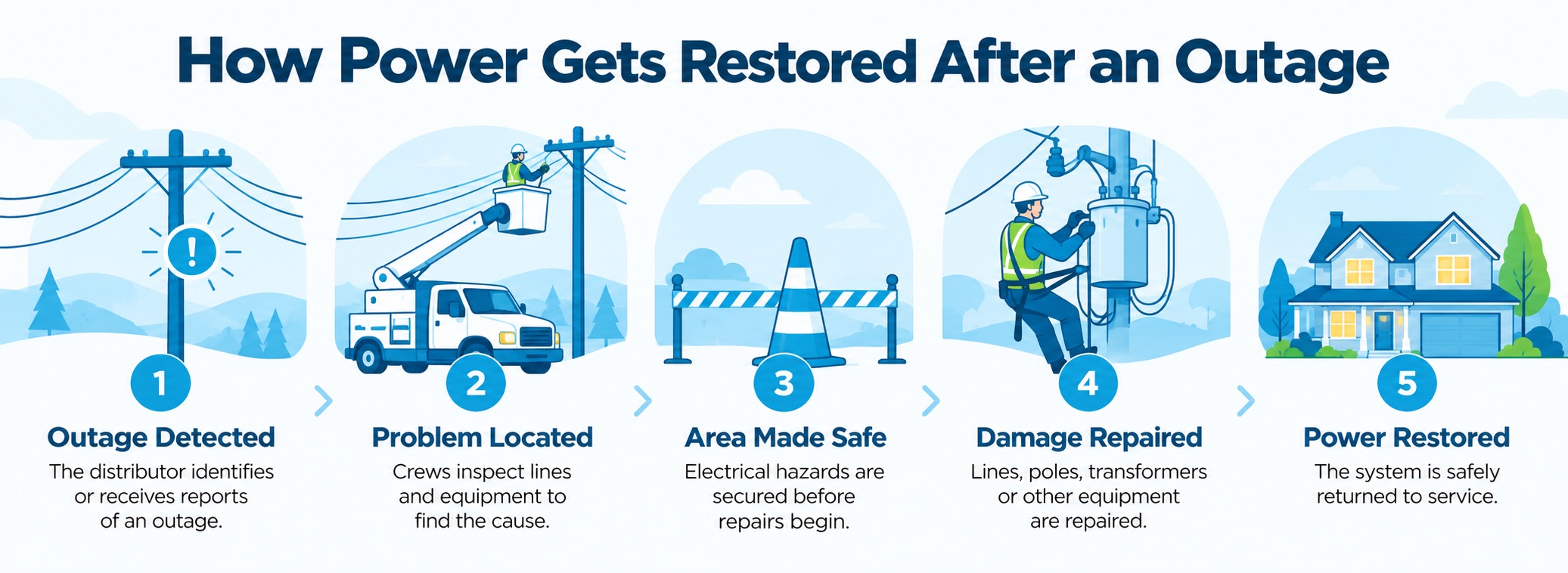
1. The Electricity Distributor Identifies the Outage
The first step is determining that an outage has occurred and which part of the electrical system is affected.
Some outages can be identified through monitoring systems, while others may be reported by customers.
In Edmonton, for example, customers can check the EPCOR Power Outage Map to see whether an outage has already been identified.
EPCOR also asks customers to report an outage if it isn’t already listed. Information from customers can help crews determine the possible source and size of the outage.
Before reporting an outage, check whether the problem appears to be limited to your property. If your neighbours still have electricity, check your main circuit breaker first.
2. Crews Are Sent to Find the Problem
Once the distributor knows about an outage, crews can be sent to investigate.
How quickly they can reach the problem depends on several factors, including the location of the outage, weather conditions, time of day and how many other outages are happening at the same time.
Finding the source can also take time.
An obvious problem, such as a damaged overhead line, may be easier to identify than a problem with underground infrastructure or a long section of power line.
As EPCOR explains:
“Finding the source of the outage takes more time for underground system issues, or if the overhead line is long or difficult to reach.”
Source: EPCOR: How We Respond to Power Outages
Once crews identify the cause and assess the damage, they can determine what repairs are needed.
3. Crews Determine What Caused the Outage
Power outages can have many causes.
The Government of Alberta identifies high winds, freezing rain, flooding and extreme temperatures as hazards that can damage power lines or strain the electricity supply.
Other outages can result from equipment failures, fallen trees, vehicle collisions, construction damage or planned maintenance.
The cause matters because every repair is different. Restoring electricity after a minor equipment problem can be much simpler than replacing damaged poles and lines following a major storm.
4. The Area Is Made Safe
Before repairs can begin, crews need to make sure the work can be completed safely.
This is especially important when poles, power lines or other electrical equipment have been damaged.
If you see a downed power line, never approach or touch it. A line may still be energized even when it isn’t sparking or moving.
The Government of Alberta recommends staying at least 10 metres, or approximately 33 feet, away from a downed power line and reporting it to the power provider in your area.
5. Damaged Equipment Is Repaired or Replaced
Once the problem has been located and crews can safely work on it, repairs begin.
Depending on the outage, crews may need to repair or replace power lines, transformers, poles, underground cables or other parts of the distribution system.
Some repairs are relatively straightforward. Others may require replacement equipment, specialized crews or additional work before electricity can be safely restored.
This is also why estimated restoration times can change. Crews may not know the full extent of the damage until they reach the affected equipment and inspect it.
6. Some Outages Are Prioritized Over Others
When several outages happen at once, crews can’t necessarily repair them in the order they were reported.
Public safety and the number of people affected can influence which problems are addressed first.
EPCOR says its Edmonton restoration priorities begin with dangerous situations, such as downed power lines on roads or vehicles. Critical services such as hospitals, police and fire services are also prioritized, followed by repairs that can restore electricity to the largest number of customers.
FortisAlberta follows a similar approach:
“When outages occur, our crews restore power in order of priority, starting with areas that have the greatest impact on public safety and essential services.”
Source: FortisAlberta: During an Outage
This means two nearby neighbourhoods can experience different restoration times, even when the outages were caused by the same storm.
7. Power Is Restored
Once repairs have been completed and the affected part of the electrical system can safely return to service, electricity can be restored.
If your neighbours have power again but your property doesn’t, check your electrical panel. There may be a separate issue affecting your home or business.
If the problem isn’t with your breaker panel, contact your local distributor and report the outage.
How Long Does It Take to Restore Power?
There is no standard restoration time for a power outage.
A small problem that is easy to locate may be repaired relatively quickly. An outage involving severe weather, fallen trees, damaged poles, underground infrastructure or widespread damage can take considerably longer.
Restoration estimates may also change as crews learn more about the problem.
EPCOR notes that every outage is different and that crews need time to arrive, locate the problem and assess the damage before an accurate restoration estimate can be provided.
If you’re in Edmonton, you can check the EPCOR Power Outage Map for current outage information and estimated restoration times when available.
FortisAlberta customers can check the FortisAlberta Outage Map for current outages and restoration updates.
Who Restores Your Power in Alberta?
The company you buy electricity from isn’t necessarily the company repairing the power lines outside your home.
Alberta’s electricity system separates retailers from distributors.
Your retailer sells you electricity, manages your plan and sends your bill. Your distributor operates the local infrastructure that delivers electricity to your property and responds to outages and electrical emergencies.
You can choose your electricity retailer, but you cannot choose your distribution company. Your distributor is determined by where you live.
If you aren’t sure which company distributes electricity in your community, use the Utilities Consumer Advocate’s retailer and distributor directory or check your electricity bill.
What Should You Do While You Wait for Power to Return?
Start by checking whether your distributor already knows about the outage.
If you’re in Edmonton, check the EPCOR Power Outage Map. If you’re served by FortisAlberta, check the FortisAlberta Outage Map.
During the outage, avoid downed power lines and damaged electrical equipment. The Government of Alberta also recommends checking your distributor’s website for updates and avoiding unnecessary travel when traffic signals may not be operating.
EPCOR recommends turning off heat-producing appliances and unplugging electronics during an outage. When power returns, reconnect essential appliances first and give the electrical system time to stabilize before reconnecting other equipment.
You can find more practical guidance from EPCOR on what to do during an outage and from the Government of Alberta’s power outage guide.
Understanding What Happens Behind the Scenes
When your power goes out, crews may be doing much more than you can see from your home. They need to locate the problem, assess the damage, make the area safe, complete repairs and safely return that part of the electrical system to service.
At Peace Power, we provide electricity and natural gas plans to Albertans, while local distribution companies maintain the infrastructure that delivers electricity to homes and businesses.
Knowing the difference can help you find the right information faster during an outage. For billing and plan questions, contact your retailer. For an outage or electrical emergency, check your local distributor’s outage information or contact them directly.