
You turn off the television, shut down your computer, and switch off the coffee maker before heading to bed. But some of these devices may still be using electricity, even when they’re not running.
This hidden electricity use is called phantom power consumption, and it can have a noticeable impact on your energy costs. According to Natural Resources Canada, standby power can account for 5–10% of a household’s electricity bill.
For Alberta households looking to manage their electricity costs, identifying and reducing phantom power is a simple place to start.
What Is Phantom Power Consumption?
Phantom power is the electricity that appliances and electronic devices consume when they’re turned off or not actively being used. It’s also known as standby power, vampire power, or phantom load.
Many modern electronics are designed to remain partially powered so they can respond quickly when needed. A television might stay ready to receive a signal from its remote control, while a coffee maker continues powering its digital clock.
Other devices maintain an internet connection, download updates, or monitor settings in the background. These features are convenient, but they require electricity.
Although the amount consumed by an individual device may be small, phantom power can add up when dozens of electronics remain plugged in throughout your home.
How Much Electricity Does Phantom Power Waste?
Natural Resources Canada estimates that standby power can account for 5–10% of a household’s electricity bill. The actual amount depends on the number of devices in your home, their energy efficiency, and how much electricity they consume while idle.
To put that percentage into perspective, consider a household with a monthly electricity bill of $150.
- 5% of the bill: $7.50 per month, or $90 annually.
- 10% of the bill: $15 per month, or $180 annually.
These figures illustrate the percentage of a hypothetical bill, not guaranteed savings. Actual costs depend on electricity consumption and the different charges included on an Alberta utility bill.
The number of connected devices also matters. Hydro One reports that the average Canadian home has more than 25 devices that consume phantom power, with an estimated annual cost of approximately $150.
That means electricity can continue being consumed throughout the day, even when nobody is home.
Which Devices Use Phantom Power?
Many common household electronics consume electricity while in standby mode. Some are easy to identify because they have illuminated displays or indicator lights. Others may appear completely switched off.
Common examples include:
- Televisions and entertainment systems: Smart TVs, streaming devices, soundbars, and gaming consoles may remain ready to receive signals or perform background updates.
- Computers and office equipment: Desktop computers, monitors, printers, and docking stations can draw electricity when they’re sleeping or waiting to be used.
- Kitchen appliances: Microwaves, coffee makers, and other appliances with digital clocks or electronic controls may consume electricity continuously.
- Chargers and power adapters: Some chargers continue drawing a small amount of electricity when left plugged in without a device attached.
- Smart home devices: Voice assistants, connected speakers, smart displays, and other network-enabled products require electricity to remain connected.
Not every device uses the same amount of standby power. Older electronics and equipment with extensive background functions may consume more than newer, energy-efficient models.
Natural Resources Canada’s standby power guide notes that some devices consume as little as 0.5 watts in standby mode, while others can draw more than 30 watts.
These are illustrative figures from an older federal guide. Modern devices may have different standby requirements.
How Much Does It Cost to Leave Electronics Plugged In?
The cost of phantom power depends on how many watts a device consumes and how long it remains in standby mode.
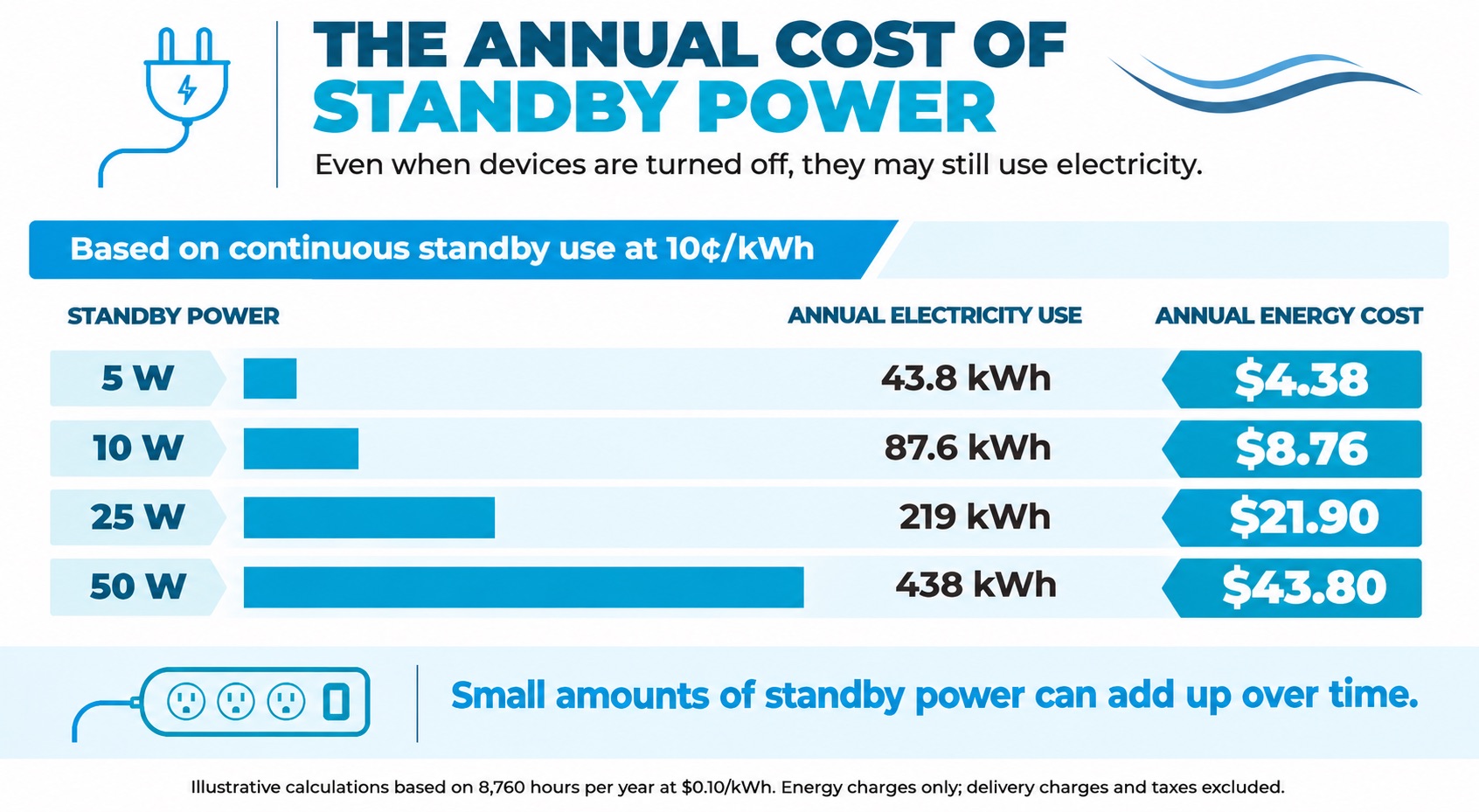
For example, a device drawing 10 watts continuously uses approximately 87.6 kilowatt-hours (kWh) over one year.
At an illustrative electricity energy rate of $0.10 per kWh, that works out to approximately $8.76 annually for a single device.
A device drawing 25 watts continuously would use approximately 219 kWh annually, costing $21.90 at the same rate.
These calculations cover the electricity energy charge only. They don’t include applicable variable delivery charges, taxes, or other utility fees.
One device might not make a significant difference to your monthly bill. However, several devices drawing standby power simultaneously can increase your household’s overall electricity consumption.
How Can You Measure Phantom Power Consumption?
The easiest way to measure phantom power is with a plug-in electricity usage monitor, sometimes called a watt meter.
These devices measure how much electricity an appliance consumes when connected to an outlet. Some models can display both real-time wattage and electricity usage over time.
To check a device, plug the monitor into an outlet, connect your appliance, and switch the appliance off as you normally would. The monitor can show whether it continues drawing electricity.
You can also check your electricity consumption through your utility account or meter data, where available. While this won’t necessarily identify individual devices, it can help you understand your household’s overall electricity use.
For a more useful comparison, measure appliances in both active and standby modes. You may discover that some electronics consume very little power when switched off, while others are worth managing more carefully.
How to Reduce Phantom Power Consumption
Reducing phantom power doesn’t mean unplugging everything in your home. A few changes to how you use electronics can help limit unnecessary electricity consumption.
Unplug Devices You Rarely Use
Start with appliances and electronics that remain plugged in for convenience rather than necessity.
A television in a guest bedroom, an unused gaming console, or a spare computer monitor may spend most of its time in standby mode.
Unplugging these devices when they’re not needed eliminates their standby electricity consumption.
Use Power Bars With On/Off Switches
Power bars make it easier to disconnect several devices simultaneously.
For example, you can connect your television, gaming console, and sound system to the same switched power bar. When you’re finished using them, turning off the power bar cuts electricity to the connected equipment.
Advanced power bars can also automatically disconnect certain devices when the main device is turned off.
Natural Resources Canada specifically recommends advanced power bars as a way to reduce standby electricity use.
Adjust Your Devices’ Power Settings
Many electronics include settings that reduce energy consumption when they’re not being used.
Look for sleep modes, automatic shutdown timers, and energy-saving settings on televisions, computers, and gaming consoles.
Some devices also offer options to disable unnecessary background functions or reduce network activity during standby.
These settings can help lower electricity consumption without requiring you to unplug devices every day.
Choose Energy-Efficient Electronics
When replacing household electronics, look for products with the ENERGY STAR certification.
According to Natural Resources Canada, ENERGY STAR-certified products generally consume less standby electricity than comparable non-certified products.
Choosing energy-efficient electronics can help reduce both active and standby electricity consumption over the product’s lifetime.
Unplug Unnecessary Devices Before Travelling
Before leaving home for an extended period, check which electronics can safely be disconnected.
Unplugging unused chargers, entertainment equipment, and small appliances can reduce electricity consumption while you’re away.
However, some equipment should remain powered. Refrigerators containing food, security systems, internet equipment needed for monitoring, medical devices, and essential home systems may require continuous electricity.
Always consider a device’s purpose and manufacturer instructions before disconnecting it.
Is It Worth Unplugging Everything to Save Electricity?
Not necessarily. The goal is to reduce unnecessary electricity consumption without creating inconvenience or interfering with essential equipment.
A modern device drawing just 0.5 watts in standby mode uses approximately 4.38 kWh annually. At an illustrative energy rate of $0.10 per kWh, that’s about $0.44 per year before other applicable charges.
Unplugging that device every day may not be worth the effort.
Instead, focus on equipment that consumes more electricity in standby mode or remains unused for extended periods.
Using a power bar, changing energy-saving settings, or disconnecting rarely used electronics can make reducing phantom power much easier.
Small Changes Can Help Lower Your Electricity Bill
Phantom power is easy to overlook because it doesn’t involve appliances that appear to be running. Yet, as Natural Resources Canada reports, standby electricity consumption can account for 5–10% of a household’s electricity bill.
You don’t need to eliminate every watt of standby power to make a difference. Identifying unnecessary electricity use, choosing efficient devices, and making a few changes to your daily habits can help you manage consumption.
At Peace Power, we believe understanding how you use electricity is an important part of managing your energy costs. Along with reducing phantom power, choosing an electricity plan that suits your household can help you take greater control of your utility expenses.
Explore Peace Power’s electricity plans and learn more about your options in Alberta.
Sources
- Natural Resources Canada. Standby Power and Smart Devices. Federal guidance on standby electricity consumption, the 5–10% estimate, and energy-saving recommendations.
- Natural Resources Canada. Standby Power: When “Off” Means On. Federal brochure with illustrative standby wattage figures and guidance on measuring electricity use.
- Hydro One. Phantom Power Tips and Tricks. Canadian household estimates and recommendations for reducing standby electricity consumption.