
A hot tub is one of life’s great luxuries—especially after a long Alberta winter day. But before you start budgeting for one (or if you’re already wondering why your bill went up after the install), it’s worth knowing what running a hot tub actually costs in electricity. The answer depends a lot on which model you choose.
Why Hot Tubs Use So Much Power
Hot tubs draw electricity in two main ways: heating the water and running the pumps and jets. The heater is the big one—keeping a 1,500-litre tub at 38–40°C through an Alberta winter takes real energy. Add in circulation pumps, jets, lighting, and the control system, and you’ve got an appliance that runs 24 hours a day, 7 days a week.
The good news is that modern hot tubs are significantly more efficient than older models, and insulation quality makes an enormous difference—particularly in cold climates like ours.
Comparing Three Popular Hot Tub Brands
To give you a real-world comparison, here’s how three well-known brands stack up on energy use in a cold-weather climate like Alberta:
Bullfrog Spas (Model A8)
Bullfrog’s JetPak system and full-foam insulation make it one of the most energy-efficient options on the market. Estimated monthly energy use: 150–200 kWh in moderate weather, 250–300 kWh during a cold Alberta winter.
Hot Spring Spas (Envoy)
Hot Spring is consistently rated among the most efficient brands. Their FiberCor insulation and energy-smart circulation pump keep costs down. Estimated monthly energy use: 175–225 kWh in moderate weather, 280–350 kWh in winter.
Beachcomber Hot Tubs (520 Series)
Beachcomber is a Canadian-made brand well-regarded for cold-climate performance. Their perimeter insulation and high-density foam keep heat retention strong. Estimated monthly energy use: 200–260 kWh in moderate weather, 300–380 kWh in winter.
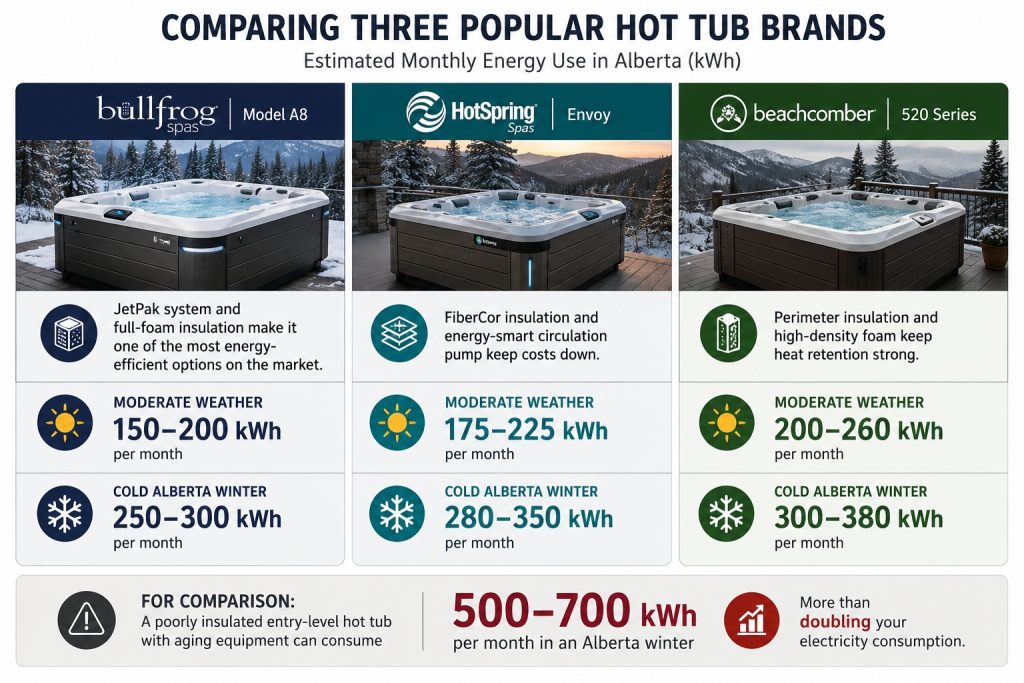
For comparison, a poorly insulated entry-level hot tub with aging equipment can consume 500–700 kWh per month in an Alberta winter—more than doubling your electricity consumption.
What That Actually Costs in Alberta
Using a mid-range winter estimate of 350 kWh/month, here’s what you’d pay at Peace Power’s current rates:
- Variable rate (avg. 5.46¢/kWh): ~$19.11/month
- 1-year fixed rate (8.99¢/kWh): ~$31.47/month
- 2-year fixed rate (8.29¢/kWh): ~$29.02/month
- 3-year fixed rate (8.19¢/kWh): ~$28.67/month
That’s for a well-insulated modern hot tub. A poorly insulated older model at 600 kWh/month would run $32.76–$53.94/month depending on your rate.
What the Experts Say
“Insulation is the single biggest factor in hot tub operating costs. In cold-weather climates, a full-foam insulated hot tub can use 50 to 60 percent less energy than a partially insulated model under the same conditions.”
— Swim University, “How Much Does It Cost to Run a Hot Tub?”
Tips for Reducing Hot Tub Energy Costs in Alberta
- Use a high-quality thermal cover and replace it when it starts absorbing water — a waterlogged cover loses most of its insulating value.
- Lower the temperature by 2–3 degrees when you’re away or won’t be using it for several days. Most tubs can reheat within a few hours.
- Run jets and pumps during off-peak hours to take advantage of lower variable spot prices.
- Invest in a well-insulated model upfront — the energy savings over 10 years far outweigh any initial price difference.
- Keep the tub clean and the filters maintained — clogged filters force pumps to work harder, increasing energy draw.
Lock In Your Rate Before You Fire Up the Jets
A hot tub adds a predictable chunk to your monthly electricity bill. That makes it a great reason to consider locking in a fixed electricity rate—so you always know what you’re paying, no matter what the Alberta energy market is doing. Peace Power’s fixed rates start at just 8.19¢/kWh on a 3-year term, with no sign-up fee, no deposit required, and multiple payment options to suit your schedule. Our variable rate, averaging 5.46¢/kWh over the past year, is also a solid option if you like the flexibility. Either way, switching to Peace Power is quick and hassle-free—because that’s how we like to do things.
Thanks for reading! We hope this helps you budget for the good stuff in life. If you have questions about your electricity plan or want to see how much you could save by switching, we’re always happy to chat.